
The Strategic Evolution of Financial Audits in Modern Accounting Practices
In an era defined by rapid technological advancement and increasing regulatory scrutiny, financial audits have evolved from routine compliance checks to strategic instruments of risk management and operational efficiency.
This transformation underscores the need for accountants and finance professionals to adopt a proactive approach that aligns audit practices with contemporary business objectives while maintaining adherence to international standards such as ISA and GAAP.
Reimagining Audit Objectives Beyond Compliance
Modern financial audits now serve dual purposes that extend beyond ensuring accurate financial reporting to safeguarding organizational integrity through robust internal controls.
The shift is evident in how audit teams prioritize identifying potential fraud risks and assessing system vulnerabilities alongside traditional financial statement verification tasks.
Industry data reveals that organizations integrating risk-based auditing approaches report a 38% reduction in material misstatements compared to those using conventional methods.
Adapting Audit Methodologies for Digital Transformation
Digital disruption has necessitated innovative approaches to audit execution, with technologies like AI-driven analytics and blockchain verifications redefining procedural norms.
Accountants must develop proficiency in leveraging these tools to enhance audit accuracy while maintaining auditor independence and evidential sufficiency requirements.
- Data mining algorithms enable real-time anomaly detection across complex transactional datasets
- Blockchain technology offers immutable records that simplify audit trails significantly
- RPA implementations reduce manual errors in high-volume processing environments
Enhancing Auditor Competency Through Continuous Learning
As audit landscapes evolve rapidly, professional development has become essential for maintaining relevance and effectiveness in practice.
Certification programs incorporating emerging topics like cybersecurity fundamentals and data science principles are increasingly shaping modern audit education curricula.
Leading professional bodies now require CPE credits focused on digital forensics and advanced analytical techniques for CPA certification renewal.
Strategic Integration of ESG Considerations in Audit Planning
Sustainability factors are no longer peripheral elements but integral components influencing audit strategies across industries worldwide.
Auditors must incorporate environmental, social, and governance metrics into their assessment frameworks to provide holistic evaluations aligned with global sustainability initiatives.
Eurostat reports indicate that over 65% of EU-listed companies now include climate-related disclosures in annual filings subject to audit review.
Fostering Collaborative Audit Relationships with Stakeholders
Successful audit engagements rely heavily on building trust through transparent communication between auditors, management, and board members.
Maintaining open channels facilitates early identification of discrepancies and enables timely corrective actions rather than reactive measures during final reviews.
Organizations with strong auditor-management collaboration demonstrate a 29% faster resolution time for identified issues according to Deloitte’s 2023 benchmark study.
Implementing Proactive Risk Mitigation Frameworks
An effective audit strategy requires embedding continuous monitoring mechanisms within daily operations rather than relying solely on periodic examinations.
Automated alert systems combined with regular control testing create dynamic defenses against evolving threats without compromising operational agility.
- Real-time dashboards track key performance indicators against established benchmarks
- Predictive modeling identifies emerging risks before they manifest materially
- Scenario analysis simulations prepare organizations for various fiscal contingencies
Leveraging Data Analytics for Enhanced Audit Insights
Advanced data visualization tools empower auditors to uncover hidden patterns and correlations previously undetectable through traditional examination methods.
These capabilities allow for more precise allocation of audit resources towards areas posing highest risk exposure based on quantitative evidence rather than subjective judgment.
Case studies show that firms utilizing machine learning models achieve up to 45% improvement in detecting irregularities during preliminary assessments.
Ensuring Regulatory Compliance Amid Evolving Standards
Keeping pace with continuously updated regulations demands systematic tracking mechanisms integrated within audit procedures themselves.
Compliance monitoring software solutions help maintain up-to-date knowledge bases regarding changes in tax codes, disclosure mandates, and sector-specific guidelines.
- RegTech platforms automate updates related to IFRS amendments and local statutory requirements
- Cloud-based documentation systems ensure instant accessibility to current regulatory references
- AI-powered query tools resolve compliance ambiguities quickly during audit processes
Preparing for International Audit Challenges
Globalization has intensified complexity in conducting cross-border audits requiring nuanced understanding of jurisdictional differences and transfer pricing regulations.
Professionals must cultivate expertise in navigating diverse legal frameworks while ensuring consistency in audit methodologies across multiple geographical locations.
International audit firms invest approximately $1.2 billion annually in training programs addressing multijurisdictional compliance challenges globally.
Securing Audit Independence in the Age of Outsourcing
Rising trends in outsourced audit functions demand stringent safeguards to preserve auditor independence and objectivity amidst conflicting interests.
Vetting outsourcing partners through rigorous due diligence protocols becomes crucial to prevent compromised audit outcomes arising from external pressures.
Research indicates that organizations implementing formalized vendor management policies experience only 12% instances of independence conflicts versus 34% industry average.
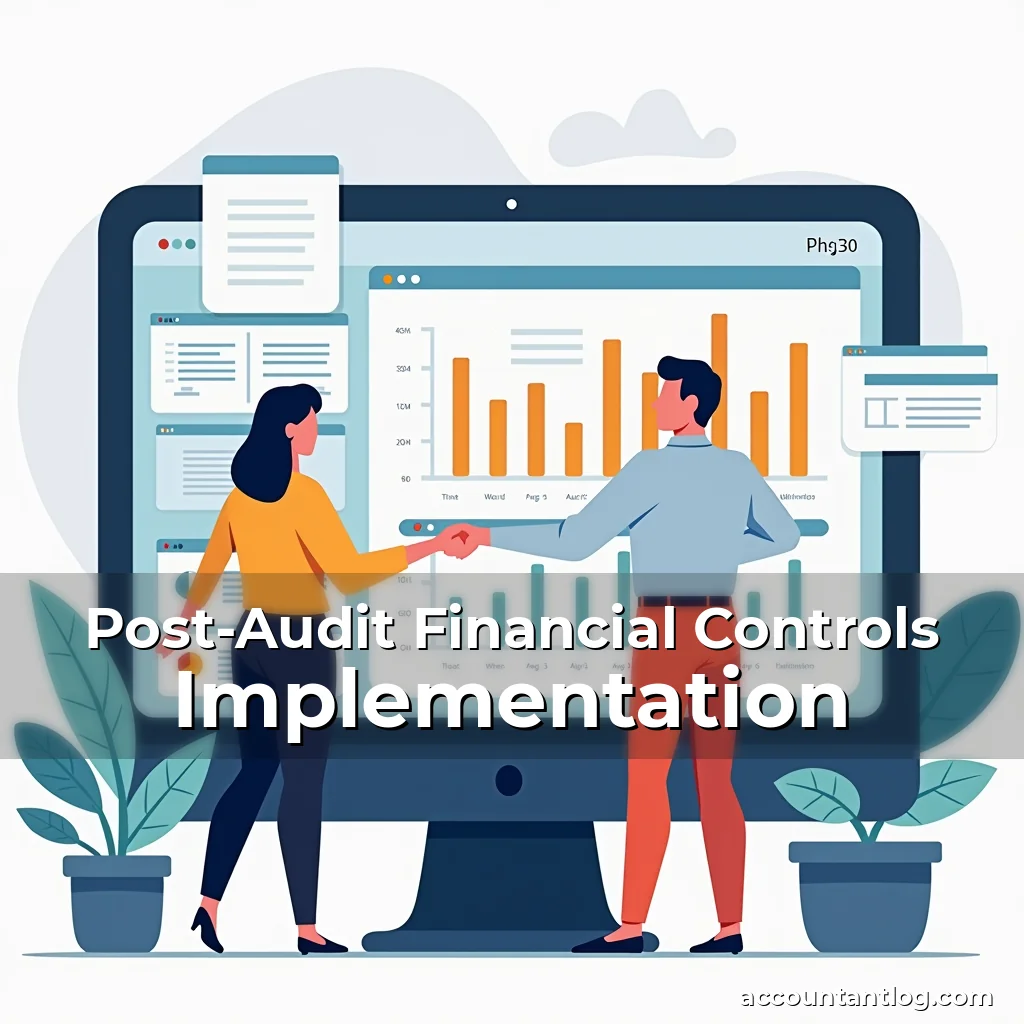
Optimizing Post-Audit Remediation Processes
Effective implementation of post-audit findings relies on structured remediation plans that integrate seamlessly with ongoing financial operations.
Mapping corrective actions to specific control deficiencies ensures targeted improvements rather than generalized process adjustments.
- KPI tracking systems monitor progress toward remediation milestones
- Internal audit committees oversee implementation timelines regularly
- Feedback loops facilitate continuous refinement of correction measures
Establishing Robust Internal Control Systems
Strong internal controls form the foundation upon which reliable audit conclusions can be drawn consistently across different periods and departments.
Segregation of duties matrices, authorization hierarchies, and access controls represent critical infrastructure components enhancing both transparency and accountability.
Companies with well-defined separation of responsibilities witness a 67% decrease in internal fraud incidents as reported by Association of Certified Fraud Examiners.
Future Trends Shaping Audit Profession Development
Ongoing innovations suggest that the future will see increased automation of repetitive audit tasks while expanding human roles toward strategic advisory functions.
Continuous professional development programs emphasizing these transition skills will play vital role in preparing accountants for upcoming transformations.
PwC forecasts that 75% of current audit work could be automated by 2030 through advancements in AI and natural language processing applications.
Conclusion
The evolution of financial audits reflects broader shifts in accounting profession itself as it adapts to new realities created by technological progress and heightened expectations from stakeholders.
To remain competitive and effective, accounting professionals must embrace change proactively while preserving core values of integrity and precision inherent in audit discipline.