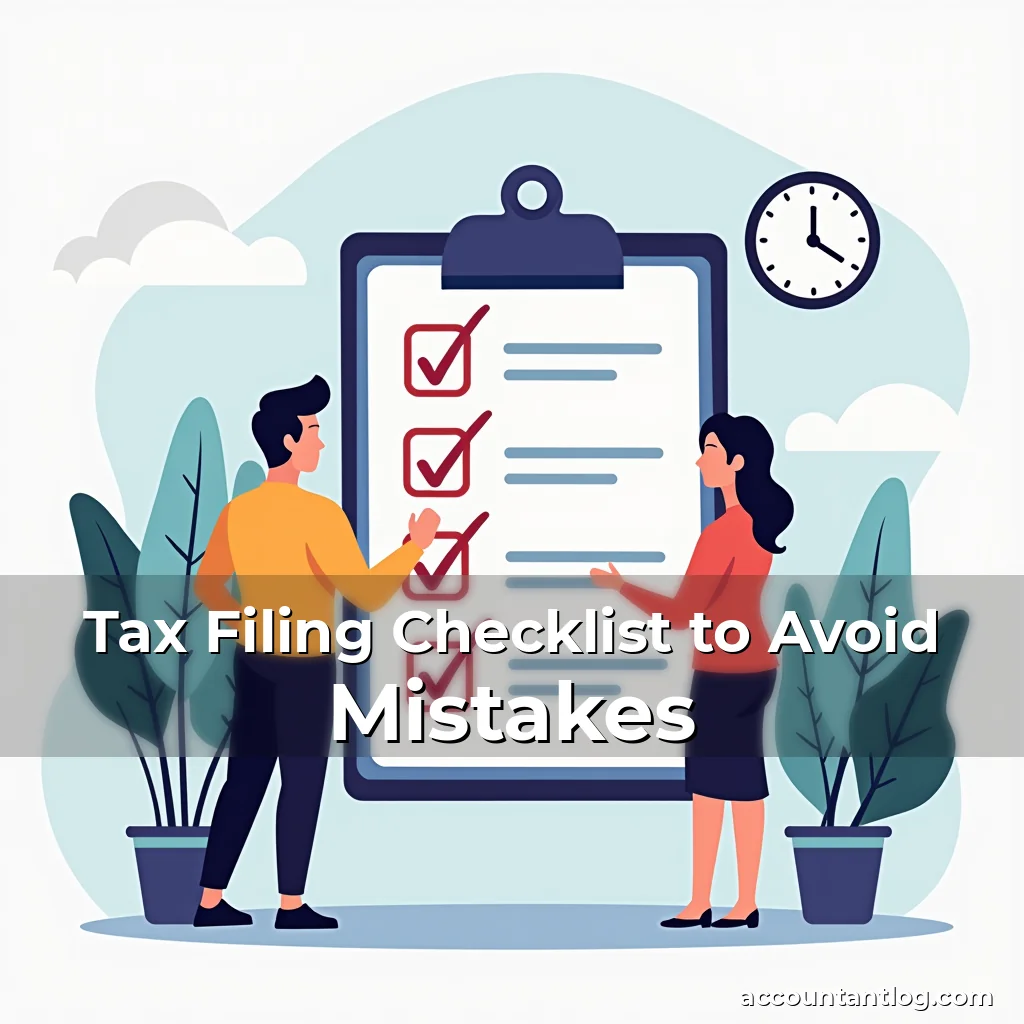
Tax Filing Checklist to Avoid Mistakes
In today’s complex financial landscape, tax filing remains a critical yet often error-prone process that demands precision. For accountants and financial professionals, mastering this area ensures compliance while optimizing clients’ outcomes.
Whether preparing personal returns or managing corporate filings, adherence to evolving regulations is non-negotiable. A well-structured approach can minimize errors and streamline operations significantly.
The Importance of Accurate Tax Filings in Professional Accounting
Accurate tax filings are foundational to maintaining trust between clients and their professional advisors. Even minor discrepancies can lead to audits, penalties, or damage to reputations.
For firms handling high-volume submissions, implementing systematic checks at every stage becomes essential. This proactive strategy helps identify potential issues before they escalate.
Professionals must also consider changing legislative frameworks annually. Understanding new deductions, credits, or reporting requirements prevents missteps during preparation phases.
Data integrity plays an equally vital role; incorrect figures from source documents directly impact final computations. Ensuring clean data entry processes reduces manual errors substantially.
Evaluating Client Financial Statements Before Submission
Before initiating any return preparations, reviewing client financial statements thoroughly is imperative. These records provide crucial context for accurate income calculations and expense allocations.
Cash flow analysis alongside balance sheets reveals patterns that might indicate unusual transactions requiring further scrutiny. Such anomalies could signal unreported revenues or hidden liabilities.
Reconciling general ledgers against supporting documentation confirms transaction accuracy across all accounts. Discrepancies here may affect various line items within tax forms significantly.
- Review revenue recognition policies: Ensure consistency with applicable accounting standards when determining taxable incomes.
- Analyze depreciation schedules: Verify correct asset values and remaining useful lives used for capital cost allowances.
- Validate inventory valuations: Confirm that stock levels align with physical counts and market conditions affecting valuation methods.
Detailed examination of payroll records is another key step. Verifying gross wages versus net pay differences helps detect potential underreporting scenarios early on.
Examining bank reconciliations provides insight into cash management practices. Unexplained balances might reflect off-book transactions needing disclosure during audit periods.
Leveraging Technology for Efficient Tax Preparation
Modern technology offers powerful tools designed specifically for streamlining tax workloads without compromising quality control measures. Cloud-based platforms enable real-time collaboration among teams working remotely.
Automated data extraction features reduce manual input efforts considerably. Scanning receipts through OCR systems accelerates categorization tasks previously done by hand.
AI-driven analytics assist in identifying irregularities automatically. Machine learning algorithms flag suspicious activity patterns that human reviewers might overlook initially.
Secure document storage solutions protect sensitive information effectively. Encryption protocols ensure confidentiality even during transmission phases across networks.
Common Pitfalls to Avoid During the Filing Process
Misinterpreting eligibility criteria for certain tax benefits frequently leads to missed opportunities. Staying updated on qualification thresholds avoids these costly mistakes entirely.
Incorrectly applying tax rates to different types of income results in significant miscalculations. Maintaining clear classifications aids in precise rate application throughout forms.
Failing to maintain organized records complicates verification procedures later. Systematic archiving facilitates quick access whenever authorities request substantiating evidence.
Inadequate cross-referencing between supporting documents and submitted forms increases risk exposure unnecessarily. Thorough comparisons prevent submission errors that could trigger investigations.
- Overlooking foreign income disclosures: Global taxpayers need comprehensive reporting mechanisms addressing international obligations accurately.
- Neglecting digital recordkeeping: Modern software solutions simplify tracking expenses digitally rather than relying solely on paper trails.
- Underestimating state-specific rules: Multistate businesses require tailored approaches considering varying local statutes affecting filings differently.
Lastly, insufficient internal review processes expose organizations to avoidable risks. Implementing multi-tiered validation steps minimizes chances of submitting flawed reports unknowingly.
Preparing Supporting Documentation Strategically
Organizing required documentation ahead of time expedites the entire filing procedure dramatically. Categorizing papers based on form types simplifies retrieval processes efficiently.
Tax Filing Checklist to Avoid Mistakes
In today’s complex financial landscape, tax filing remains a critical yet often error-prone process that demands precision. For accountants and financial professionals, mastering this area ensures compliance while optimizing clients’ outcomes.
Whether preparing personal returns or managing corporate filings, adherence to evolving regulations is non-negotiable. A well-structured approach can minimize errors and streamline operations significantly.
The Importance of Accurate Tax Filings in Professional Accounting
Accurate tax filings are foundational to maintaining trust between clients and their professional advisors. Even minor discrepancies can lead to audits, penalties, or damage to reputations.
For firms handling high-volume submissions, implementing systematic checks at every stage becomes essential. This proactive strategy helps identify potential issues before they escalate.
Professionals must also consider changing legislative frameworks annually. Understanding new deductions, credits, or reporting requirements prevents missteps during preparation phases.
Data integrity plays an equally vital role; incorrect figures from source documents directly impact final computations. Ensuring clean data entry processes reduces manual errors substantially.
Evaluating Client Financial Statements Before Submission
Before initiating any return preparations, reviewing client financial statements thoroughly is imperative. These records provide crucial context for accurate income calculations and expense allocations.
Cash flow analysis alongside balance sheets reveals patterns that might indicate unusual transactions requiring further scrutiny. Such anomalies could signal unreported revenues or hidden liabilities.
Reconciling general ledgers against supporting documentation confirms transaction accuracy across all accounts. Discrepancies here may affect various line items within tax forms significantly.
- Review revenue recognition policies: Ensure consistency with applicable accounting standards when determining taxable incomes.
- Analyze depreciation schedules: Verify correct asset values and remaining useful lives used for capital cost allowances.
- Validate inventory valuations: Confirm that stock levels align with physical counts and market conditions affecting valuation methods.
Detailed examination of payroll records is another key step. Verifying gross wages versus net pay differences helps detect potential underreporting scenarios early on.
Examining bank reconciliations provides insight into cash management practices. Unexplained balances might reflect off-book transactions needing disclosure during audit periods.
Leveraging Technology for Efficient Tax Preparation
Modern technology offers powerful tools designed specifically for streamlining tax workloads without compromising quality control measures. Cloud-based platforms enable real-time collaboration among teams working remotely.
Automated data extraction features reduce manual input efforts considerably. Scanning receipts through OCR systems accelerates categorization tasks previously done by hand.
AI-driven analytics assist in identifying irregularities automatically. Machine learning algorithms flag suspicious activity patterns that human reviewers might overlook initially.
Secure document storage solutions protect sensitive information effectively. Encryption protocols ensure confidentiality even during transmission phases across networks.
Common Pitfalls to Avoid During the Filing Process
Misinterpreting eligibility criteria for certain tax benefits frequently leads to missed opportunities. Staying updated on qualification thresholds avoids these costly mistakes entirely.
Incorrectly applying tax rates to different types of income results in significant miscalculations. Maintaining clear classifications aids in precise rate application throughout forms.
Failing to maintain organized records complicates verification procedures later. Systematic archiving facilitates quick access whenever authorities request substantiating evidence.
Inadequate cross-referencing between supporting documents and submitted forms increases risk exposure unnecessarily. Thorough comparisons prevent submission errors that could trigger investigations.
- Overlooking foreign income disclosures: Global taxpayers need comprehensive reporting mechanisms addressing international obligations accurately.
- Neglecting digital recordkeeping: Modern software solutions simplify tracking expenses digitally rather than relying solely on paper trails.
- Underestimating state-specific rules: Multistate businesses require tailored approaches considering varying local statutes affecting filings differently.
Lastly, insufficient internal review processes expose organizations to avoidable risks. Implementing multi-tiered validation steps minimizes chances of submitting flawed reports unknowingly.
Preparing Supporting Documentation Strategically
Organizing required documentation ahead of time expedites the entire filing procedure dramatically. Categorizing papers based on form types simplifies retrieval processes efficiently.
Create centralized folders containing all necessary proofs such as invoices, contracts, or official correspondence related to claims made in returns. Easy accessibility saves considerable time later.
Digital scanning enhances security through backup copies stored safely away from physical locations prone to loss or destruction events.
Maintain version histories particularly for electronic files where updates occur regularly. Tracking changes ensures using current versions consistently throughout projects.
Implement strict access controls limiting who can view or modify confidential information stored electronically. Authorization protocols safeguard against unauthorized alterations impacting authenticity concerns.
Managing Deadlines Effectively Throughout the Year
Establishing a calendar system highlighting upcoming deadlines creates awareness about approaching submission windows proactively. Setting reminders allows ample time for revisions if needed.
Breaking down tasks into smaller milestones enables better project management capabilities. Assigning responsibilities clearly distributes workload equitably among team members.
Monitoring extension requests promptly maintains compliance status continuously. Being aware of temporary relief options prevents unintentional late submissions harming client standings negatively.
Regularly updating contact lists keeps communication channels open with relevant government agencies regarding policy changes influencing timelines unexpectedly.
Synchronizing internal clocks with external ones ensures timely action taken regardless of timezone differences potentially causing confusion otherwise.
Staying Updated With Changing Tax Laws And Regulations
Attending industry seminars or webinars exposes practitioners to recent developments shaping future expectations. Engaging actively expands knowledge beyond traditional resources available passively online.
Subscribing to newsletters from reputable sources delivers targeted summaries distilled conveniently for busy professionals seeking efficient ways to stay informed quickly.
PARTICIPATING IN CONTINUOUS EDUCATION COURSES MAINTAINS CERTIFICATION STANDARDS WHILE ACQUIRING NEW SKILLS NECESSARY FOR ADVANCED PRACTICES.
Consulting regulatory bodies directly clarifies ambiguities surrounding newly implemented guidelines ensuring full understanding prior attempting implementation.
Creating personalized checklists based on individual practice areas helps prioritize which updates matter most critically influencing daily operations positively.
Beyond Compliance: Optimizing Returns Through Strategic Planning
Strategic tax planning goes beyond mere compliance towards achieving optimal outcomes benefiting both individuals and corporations alike. Identifying legitimate avenues for reducing liability legally transforms routine exercises into value-added services.
Educating clients about available incentives encourages proactive engagement rather than reactive responses toward annual cycles repeating predictably each year.
Designing customized plans according to distinct needs caters uniquely to diverse situations creating stronger relationships built upon mutual understandings shared collaboratively.
Utilizing predictive modeling techniques anticipates future scenarios enabling preemptive adjustments securing favorable positions ahead of time instead waiting until last minute decisions become necessary.
Collaborating closely with other specialists broadens perspectives incorporating multidisciplinary approaches generating holistic strategies encompassing broader aspects comprehensively addressed together effectively.
Continuous monitoring after initial filings detects emerging trends warranting revised tactics accordingly adapting dynamically responding flexibly navigating ever-changing environments confidently.
Conclusion
Meticulous attention to detail combined with strategic foresight defines successful tax professionals capable of delivering exceptional service experiences consistently over extended durations successfully.
By adopting structured methodologies emphasizing thoroughness throughout all stages coupled with embracing technological advancements judiciously enhances overall effectiveness dramatically transforming ordinary routines into extraordinary achievements realized seamlessly naturally without extra effort.

News is a contributor at Accountant Log. We are committed to providing well-researched, accurate, and valuable content to our readers.