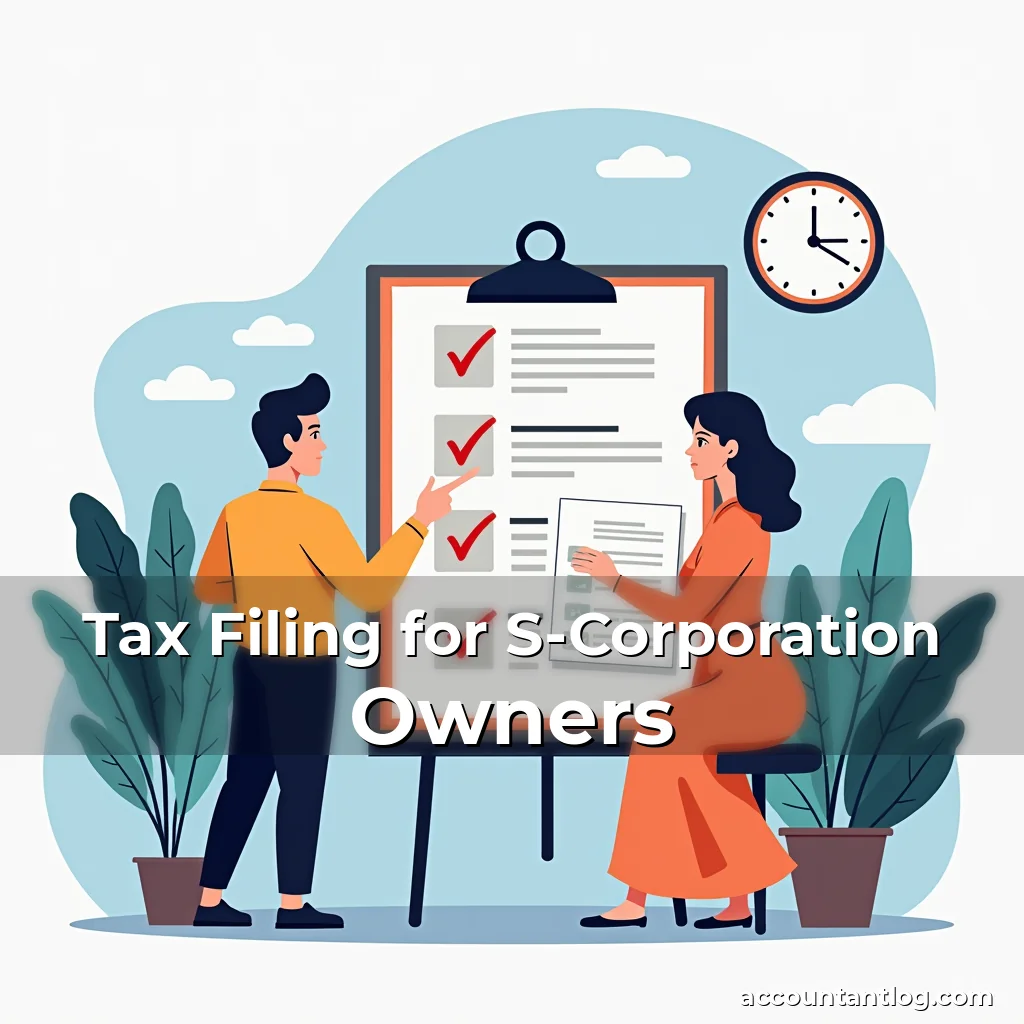
Tax Filing for S-Corporation Owners
S-Corporations present unique tax challenges that require specialized knowledge to navigate effectively. For accountants and financial professionals serving these entities, understanding the intricacies of S-corp taxation is essential to ensuring compliance while optimizing client outcomes.
The IRS imposes strict requirements on S-corps regarding pass-through taxation, shareholder compensation, and annual filings. Properly managing these aspects can significantly impact both business operations and individual tax liabilities.
Federal Tax Requirements Overview
Federal tax obligations for S corporations begin with Form 1120S, which must be filed annually by March 15th for calendar-year filers. This form serves as the cornerstone of federal reporting for S corporation taxpayers.
Accurate completion of Form 1120S requires meticulous attention to detail across several key areas including income calculations, deductions, and shareholder information. The form provides shareholders with necessary data for their personal tax returns.
While the due date aligns with C corporations, S corps have different treatment under the Internal Revenue Code. Notably, they avoid double taxation through pass-through taxation mechanisms.
- Form 1120S Schedule K: Reports total income, deductions, and other relevant figures to determine each shareholder’s distributive share
- Shareholder Statements: Must include Schedule K-1 for each shareholder detailing their pro-rata share of corporate income/losses
- Estimated Tax Payments: Shareholders may need to make quarterly estimated payments based on expected distributions
Failure to file Form 1120S timely can result in penalties ranging from $200 to $2,000 depending on the number of shareholders affected. These penalties increase if there are repeated failures.
State-Level Compliance Considerations
State tax requirements vary significantly across jurisdictions but generally mirror federal standards. Most states require S corporations to file state-level versions of Form 1120S within similar timeframes.
Some states impose additional fees or taxes specifically for S corporations. For example, California charges an alternative minimum tax surcharge for certain businesses operating within its borders.
It’s crucial to verify whether the state where the corporation operates has adopted any special provisions affecting S corp taxation. Some states offer exemptions or reduced rates for qualifying small businesses.
Electronic filing options exist in many states, streamlining the process for accountants handling multiple clients. However, paper submissions remain acceptable in most cases unless specified otherwise.
Notable State-Specific Rules
New York imposes franchise taxes that apply even to S corporations, requiring them to calculate and pay based on either capitalization or net income methods. This adds complexity beyond standard federal filings.
In contrast, Texas does not levy a corporate income tax at the state level, making it an attractive location for S corporations seeking cost-effective structures. Accountants should highlight this advantage when advising clients considering relocation.
Illinois maintains a flat corporate income tax rate of 9.5%, which applies uniformly regardless of company size or profitability. Understanding such nuances helps professionals provide accurate guidance tailored to specific locations.
Accountants working with multi-state corporations must track jurisdiction-specific rules carefully since some states apply apportionment formulas to allocate taxable income among various locations.
Shareholder Compensation Structures
Determining appropriate compensation for S corporation shareholders involves balancing payroll taxes and pass-through income considerations. Too little salary risks IRS scrutiny, while excessive amounts increase employment-related costs.
The IRS establishes clear guidelines regarding reasonable compensation, emphasizing that salaries must reflect market rates for comparable positions within the industry. Documentation becomes critical during audits.
A common approach uses a two-tiered system separating wages from dividends. Wages subject to Social Security/Medicare taxes while dividends remain tax-free at the corporate level.
Professionals must ensure that wage determinations comply with Department of Labor regulations governing fair compensation practices. Missteps here could lead to significant back-payments or penalties.
- Payroll Taxes: Employers must withhold and remit FICA taxes on shareholder wages, increasing overall labor costs
- Tax Efficiency: Dividends avoid self-employment taxes but are taxed at ordinary income rates for recipients
- Audit Risk: Underpayment of wages relative to industry norms increases likelihood of IRS adjustments during examinations
Consulting industry benchmarks and using third-party valuation services often proves helpful in establishing defensible compensation levels. Maintaining thorough documentation supports arguments made during potential disputes.
Recordkeeping and Documentation Standards
Maintaining organized records is fundamental for successful tax preparation and audit defense. All transactions must be accurately documented according to Generally Accepted Accounting Principles (GAAP).
Source documents such as invoices, receipts, and contracts serve as evidence supporting reported figures. Incomplete documentation jeopardizes claims for deductions or credits.
Implementing robust accounting systems with automated tracking features enhances accuracy while reducing manual errors prone to human oversight.
Regular reconciliations between general ledgers and subsidiary accounts help identify discrepancies early before they become problematic issues later.
Cloud-based storage solutions offer secure access to vital records while enabling real-time collaboration among team members involved in the preparation process.
Potential Audit Triggers and Mitigation Strategies
Certain red flags increase the probability of an IRS audit for S corporations. Large fluctuations in reported income compared to previous years warrant particular attention.
Disproportional distribution patterns between shareholders raise concerns about improper allocation of profits or losses. Consistency across reporting periods demonstrates legitimacy.
Unusual transaction types without adequate documentation also attract scrutiny. Clear rationale and supporting evidence justify non-standard entries.
Professional judgment plays a crucial role in identifying and addressing potential vulnerabilities before they escalate into formal investigations.
Risk assessment frameworks help prioritize areas needing closer examination, allowing focused efforts toward strengthening weak points preemptively.
- Income Variability: Explain unexpected changes through verifiable business reasons rather than speculative factors
- Shareholder Disparities: Justify differences in profit allocations with objective criteria like ownership percentages
- Transaction Legitimacy: Maintain complete records proving the necessity and validity of all recorded activities
Engaging experts for periodic reviews ensures ongoing compliance and identifies emerging risks before they manifest as actual problems.
Electronically Filed Returns and E-Filing Benefits
E-filing offers numerous advantages over traditional paper submission methods, particularly in terms of speed and error reduction. It enables faster processing times and reduces administrative burdens.
Most states now accept electronic filings through designated portals, simplifying the submission process for practitioners representing multiple clients simultaneously.
Automated validation checks embedded in e-filing systems catch common mistakes prior to final submission, minimizing chances of rejection due to technical errors.
Secure transmission protocols protect sensitive financial information from interception during digital transfers, enhancing confidentiality protections inherent in professional service relationships.
Integrated software platforms allow seamless transitions between various forms required for comprehensive filings, improving efficiency across entire workflows.
International Aspects and Cross-Border Filings
Global operations introduce added complexities for S corporations dealing with international tax implications. Navigating foreign tax laws requires careful coordination between domestic and overseas teams.
Foreign earnings subject to U.S. tax rules create additional layers of consideration, especially regarding controlled foreign corporations (CFC) status determination.
Proper classification of international subsidiaries affects how profits are attributed and taxed domestically, influencing overall liability assessments substantially.
Withholding tax treaties play a pivotal role in determining applicable rates for cross-border transactions, necessitating thorough research into bilateral agreements.
Transfer pricing documentation becomes essential for multinational operations, ensuring conformity with OECD guidelines and avoiding adverse consequences from mispricing allegations.
Emerging Trends in Tax Technology and Automation
Advancements in artificial intelligence and machine learning are transforming tax preparation processes, offering enhanced precision and predictive capabilities previously unattainable manually.
Cloud-based platforms enable real-time updates and collaborative environments where multiple stakeholders contribute simultaneously without version control conflicts.
Blockchain technology shows promise in verifying authenticity of documents and transactions, potentially revolutionizing recordkeeping standards globally.
Robotic Process Automation (RPA) handles repetitive tasks efficiently, freeing up professionals to focus on strategic advisory roles instead of routine computations.
Continuous monitoring tools detect anomalies instantly, providing proactive alerts about potential compliance issues before they escalate into serious matters.
Common Mistakes and How to Avoid Them
Misclassifying employees versus independent contractors remains one of the most frequent errors encountered in practice. Correct categorization impacts payroll responsibilities and deductible expenses alike.
Oversights in maintaining contemporaneous records weaken defenses against audit challenges, making well-documented procedures essential for effective risk management.
Incorrect application of depreciation schedules leads to inaccurate asset valuations, affecting long-term financial projections and tax liabilities concurrently.
Improperly allocating overhead costs distorts true operational performance metrics, creating misleading representations of business health indicators.
Underestimating state-level requirements results in missed deadlines or incomplete submissions, triggering unnecessary penalties despite good intentions towards compliance.
- Employee Classification: Use IRS tests to determine correct designation; maintain thorough documentation for support
- Record Retention: Implement systematic archiving policies covering statutory holding periods
- Depreciation Methods: Choose consistent approaches aligned with industry norms and regulatory expectations
- Cost Allocation: Apply uniform principles across departments to ensure equitable treatment
- State Compliance: Monitor changing regulations regularly through reliable subscription services
Staying informed about evolving best practices minimizes exposure to avoidable complications arising from simple misunderstandings or procedural lapses.
Strategic Planning Opportunities Within Tax Filings
Annual tax preparations offer valuable opportunities to refine business strategies based on current fiscal realities. Proactive analysis reveals areas ripe for optimization improvements.
Leveraging available deductions maximizes savings while adhering strictly to eligibility criteria established by legislation. Strategic choices influence future cash flow availability positively.
Reviewing historical data assists in forecasting trends accurately, facilitating better-informed decisions regarding expansion plans or operational modifications.
Collaborative discussions with business owners identify synergies between financial goals and achievable targets grounded in realistic assumptions derived from past experiences.
Integrating tax planning into broader organizational objectives creates cohesive alignment between immediate needs and long-range aspirations seamlessly.
Conclusion
Navigating the complex landscape of S-corporation tax filings demands expertise, diligence, and continuous education. Mastery of these requirements empowers professionals to deliver exceptional value to their clientele consistently.
By staying abreast of regulatory developments and embracing technological innovations, accountants can enhance service quality while mitigating risks associated with compliance shortcomings.

News is a contributor at Accountant Log. We are committed to providing well-researched, accurate, and valuable content to our readers.